Climber Goes Missing on Mount Everest: Importance of Experience and Preparation
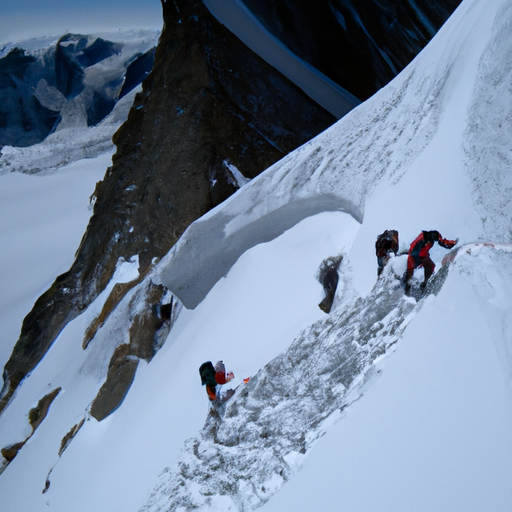
A Singaporean climber, Mr Shrinivas Sainis Dattatraya, has gone missing near the peak of Mount Everest. He had summited the 8,949m peak on May 19 but then suffered from frostbite and altitude sickness. He became separated from his group and fell down at around 8,000m. A team of sherpas began search operations on May 22, but he was reportedly last in contact with base camp officials at around 8,500m. Mr Shrinivas was part of an expedition organised by Nepalese climbing firm Seven Summit Treks. His family has appealed for urgent help, including a special rescue team.
Experience and Preparation are Key to Surviving Expeditions
Three veteran climbers have cautioned that years of experience and being prepared for the worst are key to surviving expeditions to the world’s tallest mountains. Climbers have to contend with the “death zone”, where the air is too thin to survive for long without supplementary oxygen. Oxygen levels fall below 40 per cent here and increase the risk of severe altitude sickness – namely, high altitude cerebral edema (HACE) and high altitude pulmonary edema (HAPE), which are both potentially fatal. Mr David Lim, who led Singapore’s first expedition to Everest in 1998, is no stranger to that. The 58-year-old motivational speaker has suffered HAPE twice while scaling mountains over the past three decades. He told CNA that more experienced people have greater self-awareness in terms of situational awareness.
Climb Lower Peaks First, Be Wary of Altitude Sickness
Mr Lim advises climbers to climb lower peaks first and gain experience before attempting the “eight-thousanders”. He also advises climbers to be wary of altitude sickness and to take precautions such as acclimatisation and hydration. Climbers should also be aware of their physical condition and rate of ascent and descent. On Everest, it’s everest/ » title= »Expérience et préparation sont essentielles, disent les alpinistes après la disparition d'un Singapourien sur le mont Everest. »>much harder to do this because sometimes climbers are chronically hypoxic due to lack of oxygen. Mr Lim did not make it to the Everest summit in 1998 and 2001 but has since gone on to conquer numerous “virgin peaks”, which are those that were unclimbed and have no pre-laid route.
Conclusion
Climbing the world’s tallest mountains is a dangerous and challenging endeavour that requires years of experience and preparation. Climbers have to contend with the “death zone” and the risk of severe altitude sickness. Climbing lower peaks first and gaining experience is advisable before attempting the “eight-thousanders”. Climbers should also be aware of their physical condition and rate of ascent and descent. The search for Mr Shrinivas Sainis Dattatraya is still ongoing, and his family has appealed for urgent help.